


Howdy! You might have missed us last month while we took a hiatus to focus on some big changes around the office. We’re keeping the spirit of WVEC alive as we change our communications and branding. You might notice a change to our looks, but we’re still the same statewide grassroots policy coalition you joined years ago. Stick with us as we make some changes. Have feedback you’d like to share? Let us know by emailing our team at info@wvecouncil.org. We value our members and look forward to hearing from you!
In August, Governor Morrissey and other lawmakers released the West Virginia Responsible Data Center Development Plan. The 10-page document details the group’s key principles and projected issues on data center development. Although the plan is supposed to be a guidebook for responsible data center development, it does not go into extensive detail on how state leaders will develop or amend policies that regulate aspects like water usage, impact assessments, or local tax revenue.
Since their plan doesn’t go into detail, we explored regulations in neighboring states to see how places like Pennsylvania are actually addressing responsible development. The article is a light overview of how policy can protect against raised utility rates from infrastructure projects to meet energy demand, and how counties in Virginia are using local control to govern what can be developed in certain zones. You can learn more about the fight against data centers in West Virginia by visiting the new WV Data Center Accountability Project website.
This month we have our usual segments, including a member spotlight featuring Audrey Bennett from the WVU Sierra Student Coalition, and great reading selections from Sierra Club’s Lisa DiBartolomeo. Also see a round-up of environmental news and upcoming events and opportunities in Notes & News and Happenings Around the Mountain.
When browsing events in Happenings Around the Mountain you’ll notice the date for our annual benefit show at The Empty Glass, Green Jam! Join us on November 24th from 6 to 10 p.m. for a great time. Help us raise money to meet our policy goals next year. Together, we can protect our mountains and communities from the threats of data centers, PFAS contamination, and more.
Enjoy this month’s newsletter and be sure to subscribe so you don’t miss any future publications. In the meantime, consider joining an environmental group near you and donating to keep the fight going.
Gathering for a Greener Future
2026 WVEC Annual Meeting
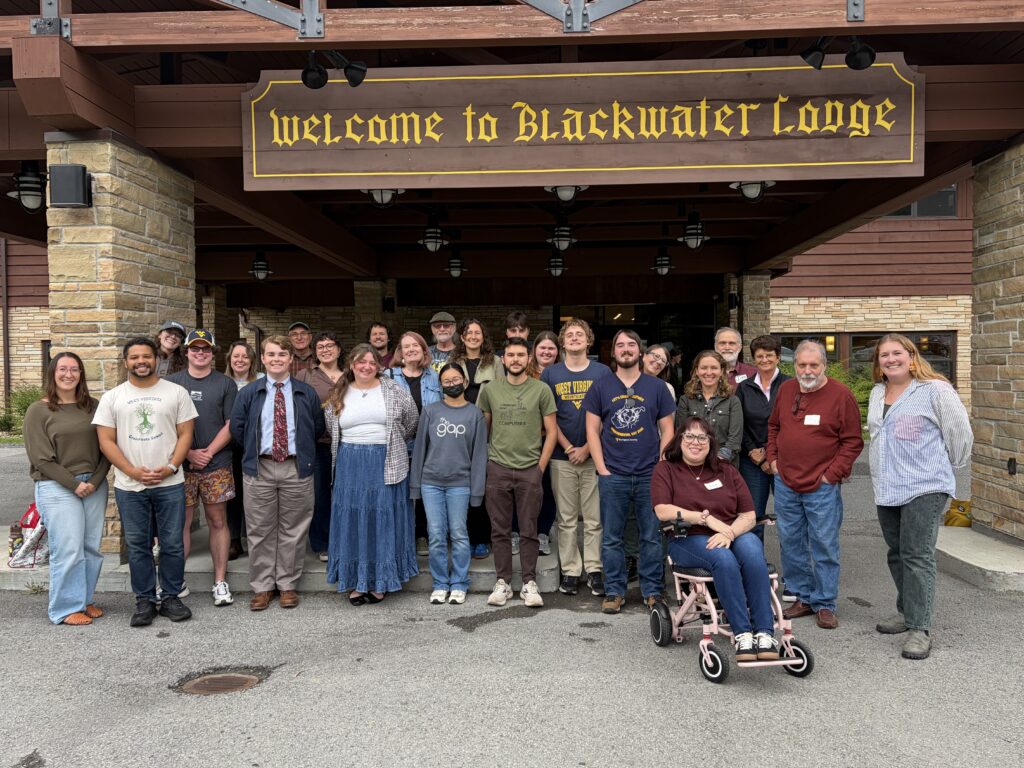
For nearly 40 years, the West Virginia Environmental Council has brought people from across the Mountain State together to rally for a greener future. This year, member organizations and other allies came together again during the first weekend of October to learn and grow. At Blackwater Lodge, we connected with new and old friends, learned from each other’s experiences, and enjoyed Tucker County’s beautiful scenery.
This year’s gathering looked similar to meetings of the past: member organizations shared updates, policy experts spoke about lessons learned from past legislative sessions, and everyone participated in the timeless Live on the Dot activity. This year we also incorporated more group activities and some crafting.
Students from WVU’s Sierra Student Coalition and the Center for Resilient Communities joined us to learn more about environmental organizing. It was inspiring to hear about what they’re working on back at the University. Maria Russo, policy specialist at West Virginia Rivers Coalition, brought the spirit of education to this year’s meeting.
Inspired by an activity at a previous conference she attended, Russo guided us through a policy drafting activity. Reminding us all that democracy is for everyone, she encouraged small groups to try their hand at drafting legislation to address issues like sustainable agriculture. One group developed a policy that rewards farmers using regenerative agricultural practices with a 10% tax credit.
Part of her lesson included a reminder that anyone can ask their legislator to write and sponsor a bill on issues in their community. While we might feel disconnected from the work happening at the state and federal level, politics is for everyone. It’s important to remember that we know the issues our communities are facing, and together, we often find solutions. Our representatives should hear and engage with our ideas. To learn more about how to pitch an idea for a bill, visit “How a Bill Becomes a Law in West Virginia” from West Virginia University’s Government Relations.
We’re so grateful to everyone who spent the weekend with us, and we’re already looking forward to next year’s gathering.
More responsible data center development is possible, and it’s happening next door
By Anna Saab
In West Virginia, the Public Service Commission (PSC) has been considering NextEra’s interstate transmission line project known as the MidAtlantic Resiliency Link project. Advocates and commission staff alike don’t see local benefit to the project, which is projected by Cathy Kunkel to cost West Virginians hundreds of millions in just the first 15 years of operation.
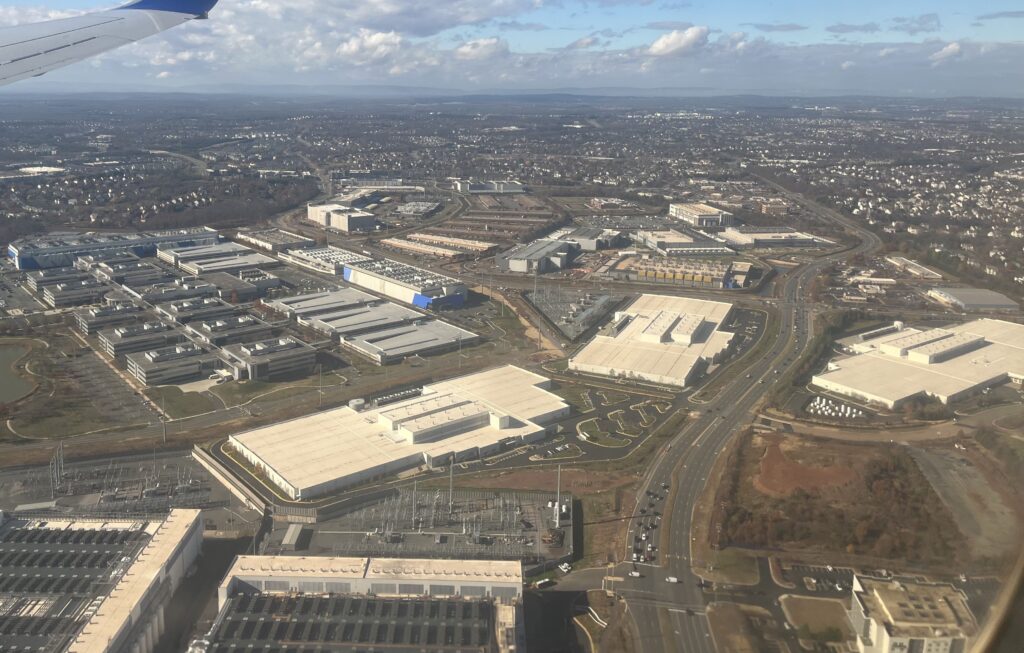
Data centers seem to be popping-up in every region of the state. Although our state government hasn’t done enough to protect us from the harms they pose, we can take notes from other states. Neighboring states like Virginia and Pennsylvania have taken measures to protect communities first, all while still attracting their development.
Pennsylvania has ensured some semblance of local control by requiring local municipality approval before the state’s Department of Environmental Protection considers a state permit for developers, and data center development is barred from receiving fast-track permitting through the state’s economic development program.
In West Virginia, the Public Service Commission (PSC) has been considering NextEra’s interstate transmission line project known as the MidAtlantic Resiliency Link project. Advocates and some commission staff alike don’t see many local benefits to the project, which is projected by energy analyst Cathy Kunkel to cost West Virginians hundreds of millions in just the first 15 years of operation.
In Monongalia county, Mon Power is requesting the PSC’s approval of a $2.4 billion natural gas-powered power plant. The energy subsidiary has requested rate increases for its consumers in order to pay for the power plant — a power plant First Energy needs to help meet energy demands from data centers that have yet to materialize.
As the economy has continued to decline, people around the state are already struggling to buy groceries and gas. Utility rates in the state are among the highest in the country, but that doesn’t seem to matter to energy giants in the state as they continue to ask that ratepayers take the hit for rising energy demands.
Worse yet, state officials seem divided on priorities when it comes to protecting constituents or protecting industry. There certainly wasn’t enough consideration given when developing HB2014, which stripped local control and oversight for data center development.
Proponents of HB2014 might have you believe that Pennsylvania struggles to attract data center development with so many regulations. The reality is, Pennsylvania, albeit quite a bit larger, has far more data center projects than West Virginia.
While economic development is typically a great opportunity for local tax revenue, HB 2014 limits that revenue. Counties only receive 30% of the tax revenue from local data center development.
Virginia, which has more data centers than any other state in the country, doesn’t protect communities in the same way. However, more local control allows for municipalities to guide things like zoning. Loudon County, for example, requires local consideration and approval from the Board of Supervisors, and data centers are only permitted in industrial zoning areas.
Local control and oversight aren’t a hindrance on development, but an important democratic tool. Communities should have control over what’s developed in and near their neighborhoods. There’s so many more measures that can be taken to protect communities and the environment from unfettered data center development. These examples are just the surface.
More responsible development is possible, and in many ways, the policies of neighboring states are just scratching the surface. There are measures our government can take to better protect our communities and environment.
Author Note: Although this article explores “more responsible data center development”, WVEC continues to stand against data centers in West Virginia.
Green Pages: Books With Board Members
This month’s reading recommendations were submitted by Lisa Di Bartolomeo of Sierra Club WV’s Chapter. Her picks are a blend of creative storytelling and informative nonfiction. To find these books at your local library, visit https://www.usa.gov/libraries-and-archives. You can also support a variety of independent bookstores through bookshop.org.
I love reading so much, and have so many “favorite books” that it’s difficult for me to choose among them. As a helpful delimiting tool, I decided to focus on some of my favorites from the past two years of reading – and even then, it was a challenge to winnow the number down to five.
Michael Lewis. The Fifth Risk. This book helped me understand the federal government better, and therefore helped me to appreciate some of the irreplaceable talent that, until recently, ran our country. Stories of unsung and unknown heroes, unfamiliar and obscure agencies, and hidden but vital activities run across the pages of this slim volume. I learned about a Coast Guard officer who figured out how to use math and data to improve the ability to rescue people lost at sea. I learned that no one knows how powerful tornadoes are until they actually hit. I learned a lot from this book, but more than anything I learned what we have lost as talented, motivated, creative, experienced experts have left or been forced from our government.
Olga Tokarczuk. The Empusium. Tokarczuk, a Polish, Nobel-Prize winning author, is a word-artist. Her literary creations spill off the page as if tiny creatures were emerging from the book to creep up onto you. Her linguistic play, folkloric invention, and unreliable narration combine to offer what is at once verbal ballet and thoughtful moral tale. Saying anything more risks spoiling the ending’s unique pleasure.
Ian McEwan. What We Can Know. McEwan is an acknowledged master, and this late-career work shows off many of his talents. Simultaneously a post-apocalyptic novel, a literary sleuthing story, an anatomy of a marriage, and a philosophical musing on the limits of knowledge and our own ephemerality, the book combines them all without any visible seams or gaps. Set in a post-climate-disaster world, the novel helps us to imagine – painfully – what there is to lose.
Wright Thompson. The Barn. This book will gut you, but it’s worth it. Thompson focuses his narrative about the murder of Emmett Till in 1955 on a particular spot of Mississippi land: “Township 22 North, Range 4 West, Section 2, West Half.” This location data, repeated like a mantra throughout the book, bases the horror of white supremacist violence in a spot on the map, but also in families, in communities, and even in the distant past. By making this cursed spot a narrator of sorts, Thompson shows us the life and death of Till, as well as all the others who were touched by that life and that death. Too few of us learned the facts of Till’s murder in school; Thompson’s elegiac work enables us to remedy that absence.
Peter May. The Black House. Set on the Scottish Isle of Lewis, this “tartan noir” offers a sweeping thriller woven together from flashbacks, history, local traditions, and personal tragedy. The mystery builds quickly as the main character returns to his childhood home to investigate a murder, and as he is inevitably forced into old conflicts that open long-festering wounds. May does a beautiful job of working the past into the present, as well as turning the landscape from a backdrop to a living, breathing character.
Member Spotlight
This month’s member spotlight features the WVU Sierra Student Coalition’s Audrey Bennett. Bennett is the organization’s vice president and Eberly College of Arts and Sciences Senator in WVU’s Student Government Association.
Audrey Bennett is a junior at West Virginia University with a double major in Sustainability Studies and Multidisciplinary Studies. A proud native of Wheeling, West Virginia, Audrey serves as the WVU Sierra Student Coalition’s Vice President. She aspires to attend graduate school and explore the intersectionality of cultural and environmental research.

How did you get into environmental work & what work are you most proud of?
I got into environmental work when I joined Sierra Club at the beginning of my freshman year. I took a hike with them at Cooper’s Rock, and I remember it being fun! I’m most proud of hosting the concert at 123 Pleasant Street last school year. We raised $500 for Tucker United.
What part of West Virginia’s ecosystem/environment is most special to you?
My favorite part of West Virginia’s native ecosystem is the rhododendron flower. I think the pink petals are beautiful, and I hope to get a tattoo of it someday!
When you aren’t doing things with WVU Student Sierra Coalition, what do you like to do?
When I’m not with Sierra Club, you can find me reading books. My favorite genre to read is historical fiction, especially about social inequalities, the Civil Rights Movement, and general Appalachian culture.
Notes & News
Nuclear Garbage Wars
Late last month, Governor Morrisey announced that West Virginia bid for the opportunity to become a new nuclear fuel waste site for the federal government. The bid was one of several other states’ bids in a request from the federal government to volunteer to take on waste from the US’s goal to expand its advanced nuclear energy program. Thanks to incredible reporting from reporters like Mike Tony of the Gazette, as well as lots of public pressure from engaged communities around the state, the state pulled its bid. Governor Morrisey claimed the state government never intended to make West Virginia a nuclear dumping ground. Research and reporting show otherwise. Read more about it below:
WV touted ability to fast-track permits, listed potential sites in nuclear campus bid
Morrisey contradicts admin’s own nuclear campus bid in response to Gazette-Mail report
WV backs away from nuclear campus and waste storage pursuit after Gazette-Mail report
W.Va. Nuclear Initiative With Feds Off
Monarch Compute Campus Data Center
NScale Global’s 2,250 acre Mason County data center campus is currently only partnered with Anthropic after Microsoft pulled out of its lease for AI compute capacity. The microgrid is capable of 2.16 GW of gas-fired power generation, scalable to more than 8 GW by 2031. At this time, DEP is considering air and water permits. Interested parties can comment during the public hearing on October 29. For more information and to register, visit bit.ly?MonarchDEPVirtual
For more information visit masonwvunited.org , wvdcap.org, and wvcag.org/datacenters.
Data Center Threatens Rare American Chestnut Orchard In W.Va.
In West Virginia, we have one of only a few orchards of mature American Chestnut trees in the country. The NScale data center campus in Mason County is set to be built on the orchard.
Transmission Lines
The PSC will host a weeklong hearing into the case of the MidAtlantic Resiliency Link (MARL). For more information on MARL and the weeklong hearing, see these links:
Weeklong Hearing Scheduled For Proposed Transmission Line
Charleston Gazette-Mail
WV agreed to pay up to $597K annually to Marshall, WVU units for water partnerships
As part of the Morrisey administration’s “Clean, Clear Water Strategy”, the West Virginia Water Development Authority will pay up to $327,000 annually to Marshall University Research Corp. and up to $270,000 annually to West Virginia University Research Corp.
Health concerns aired during meeting on Mason data center permit request
Joe Kessler, New Source Review permitting manager for the DEP explained the permitting program only requires an assessment of air pollution, not a full environmental impact statement. Interested parties can comment during the public hearing on October 29. For more information and to register, visit bit.ly?MonarchDEPVirtual
Morrisey admin approved Clean-Seas performance loan reprieve despite red flags
Financial uncertainty mars Clean-Seas. Still, the Morrisey administration has provided the company with a one-year reprieve on the terms of the $2M loan it granted.
PSC OKs utility suggestions, scaled-back rules prioritizing coal-fired plant use
The new rules will now be reviewed by the Legislative Rule-Making Review Committee. The PSC asserts that operating at higher capacity will lower costs, but energy experts disagree.
Valley North project slated to impact nearly 5,000 WV landowners within 1,000 feet
Presently, the West Virginia counties with the highest number of impacted landowners includes Barbour, Jefferson, Hampshire, Roane, Upshur, and Kanawha.
DEP permit bids detail significant Mason County data center environmental impacts
The preliminary determination was issued on September 28th, and states that construction would meet all emission limits and other conditions. A virtual hearing on the permit will be held on Thursday, October 29 at 6 p.m.
Justice firms’ legal trouble deepening over evidence of failed health safeguards
One case against Senator Justice’s business empire shows evidence that the companies failed to meet contractual obligations to provide healthcare and prescription drug cost coverage. Another shows the Greenbrier Clinic might not have been using mammography technology up to federal standards, bringing testing validity into question.
Gazette-Mail water test participants pan WV, US response to poor state water quality
In partnership with the West Virginia Rivers Coalition, the Gazette-Mail collected more than 30 samples of residential well water for independent testing. The results show evidence of gas and oil brine, PFAS, E. coli, and other contaminants in different areas of the state.
Kanawha County mine had long safety and health violation history before miner’s death
The Speed Mine in the Cabin Creek area had a history of health and violations before the recent fatal event.
Federal appeals court confirms Justice owes nearly $30M to surety bond provider
The ruling comes after Justice appealed an earlier ruling. The sum is a combination of unpaid debt, collateral obligations ,and prejudgement interest beginning in July of 2023.
WV home energy rebate launch offers savings path as PSC eyes potentially costly rules
Four years later, the West Virginia Office of Energy has launched a home energy rebate program. The program is funded buy the Inflation Reduction Act, legislation signed into law in 2022.
Putnam commission presents data center regulations, though enforceability is unclear
The resolution requires developers to pay for any/all of the necessary water, sewer, and power upgrades, fund water feasibility studies, and other measures meant to protect the community and their resources. It’s unclear if the measures are enforceable.
Lexington Coal Company faces $8.6 million-plus DEP lawsuit, asset seizure threat
In addition to the DEP lawsuit, the company owes more than $18 million in a federal lawsuit with former business partners.
DEP OKs Peoples Cartage fire site plan that warns of vast contamination potential
The plan was written by Pennsylvania-based Groundwater & Environmental Services Inc. DEP approved it in just two days.
WV water funding low for southern coalfields, reliant on expiring federal support
The Southern Coalfields don’t receive the same investments in state public water and wastewater system upgrades compared to the rest of the state.
WV legislative session shows concealment on data centers, other state government areas
West Virginians from around the state gathered at the Capitol last month to protest the consequences of HB 2014. Data center development encroaches on their homes without their consent and without the tax benefits.
WV power providers fight ‘public interest’ reform, work to extend coal plant lives
Coal isn’t just unreliable during weather emergencies and peak demand, it’s also more expensive than alternative energy sources. Despite this, PJM has continually fought to keep coal plants burning.
WV especially prone to health, energy bill harm from EPA power plant rule repeal moves
West Virginia has the nationally highest reliance on coal-fired energy for electricity, all to the detriment of our health and wallet.
WV officials wait on, brace for FEMA decisions amid agency upheaval, flood woes
Communities around West Virginia experienced severe flooding throughout this past summer. Changes to FEMA could have serious consequences on how our communities recover in the future.
WV lawmakers hear about dropping federal support, other aid limits for water upgrades
DEP Secretary Harold Ward expressed dwindling congressional funding support for water infrastructure during interims last month. West Virginia continues to top the charts for different public waterway health violations.
WV data center secrecy and pollution issues loom large amid growing AI risks
Senator Justice believes data centers can be developed without bringing harm to West Virginians. The Environmental Protection Network, an environmental nonprofit composed of former EPA scientists and experts, reports that the increase in electricity demand for AI data centers alone poses a serious health risk to Americans. Mike Tony has more details about the landscape. For more from the EPN, visit Safer not Sicker.
PSC staff joins consumer and landowner advocates in urging MARL project rejection
After visiting approximately 80 landowners who would be impacted by the project, the PSC staff submitted testimony in formal opposition to MARL.
$3M+ judgement entered vs. Justice firms in case that raised criminal liability concern
A legal dispute between former vice president and Senator Justice’s son Jay has come to a head.
West Virginia sues Pennsylvania over ‘naked economic warfare’
West Virginia is suing Pennsylvania for effectively preventing interstate energy competition. JB McCuskey says Act 40 and Act 114 unfairly protect in-state energy generators.
Federal court halts $75B New York ‘Climate Superfund’ law
A US District judge has ruled that there is no difference between charging companies for their emissions and regulating them, effectively overstepping federal authority.
WV leaders ignore high public health costs from large-scale data center development
Governor Morrisey and other lawmakers claim to be focused on improving statewide public health and healthcare access. At the same time, they’ve continued to promote hyperscale data center development across the state — something that threatens clean water and air for surrounding communities.
WV fighting tightened EPA soot rule despite high pollutant levels and health risks
Despite our state’s high mortality rates for respiratory illness, West Virginia is fighting to weaken federal air quality standards surrounding soot.
Morrisey hails state certifications for two Mason County data center projects
At the West Virginia Chamber of Commerce’s 90th annual Meeting & Business Summit the Governor announced the new data center project in Mason County would be developed by Nscale and Starwood Digital Ventures.
New clean energy partnership to firm WV grid comes amid regional clean energy dearth
St. Christopher Episcopal Church in the Edgewood area of Charleston has recently diversified its energy reliance. The church now has 69 solar panels, majorly reducing its monthly electricity bill.
As NextEra OKs MARL case delays, APCo fights partial PSC power line project denial
The PSC denial of APCo doesn’t bode well for NextEra’s MARL project.
DEP records detail Peoples Cartage blaze chemicals, another fire that led to violation
Thanks to DEP records, we know that the materials burned in the early July warehouse fire included plastic resins and Kraton G polymers. Safety data sheets for the polymers state that the powders can “irritate the respiratory tract, skin, and eyes.”
Monarch, Google data center project environmental dangers driving resident opposition
During a county commission meeting in late August, Putnam and Mason county residents spoke against the data center project being developed in Putnam county.
WV Lottery OKs Greenbrier control change, sparking Justice-Morrisey war of words
Kennedy Lewis Investment Management now has controlling interest in the Greenbrier. Senator Justice originally purchased the resort in 2009 when it faced bankruptcy. The Governor made a pointed statement online following the deal, causing the Senator to take aim back.
‘They need to fix this’: McDowell County residents sue coal firm for clean water
The Southern Coalfields have gone without clean water access for years. Eighteen residents in Gary are now suing a nearby metallurgical coal provider and affiliate for contamination that renders their tap water unusable.
Pleasants Power Station sale eyed as split Omnis firms fight over plant’s future
Quantum Pleasants LLC defaulted on the nearly $51 million loan awarded in 2023. The loan was meant to be used to convert the coal-fired Pleasants Power Station into a hydrogen production facility. That conversion hasn’t happened.
Torli Bush: No, Mr. Hamilton, coal companies don’t care
Torli Bush responded to West Virginia Coal Association President Chris Hamilton’s publication defending coal companies. Hamilton argued coal companies do care about miners.
Mountain State Spotlight
NextEra’s proposed power transmission line would cut through acres of West Virginia land on its way from Pennsylvania to Virginia. According to NextEra, MARL is necessary in order to strengthen the power grid. But the line doesn’t connect to any substations in West Virginia.
The USDA is in the process of rescinding the Roadless Rule, which protected millions of acres of public lands across the United States. In West Virginia, more than 150,000 acres of land could be at risk of damages from opening logging and other industrial transport roads.
After settling with West Virginia Rivers Coalition and others for major water pollution, Chemours (formerly DuPont) is being sued again. This time a class-action suit from Wood County residents whose lives and properties have been impacted by years of PFAS pollution.
Communities around the state have been demanding local control over data center development since HB 2014 stripped away local power. The Governor’s responsible data center development plan says communities should be involved, but how can they be involved without any power.
Trump and Congress want states to take the lead on disaster recovery. West Virginia isn’t ready.
For years lawmakers have failed to put funding in the Flood Resilience Fund. Now more than ever state funding will make or break recovery in communities hit by flooding and other disasters.
West Virginia Public Broadcasting
Kentucky Power To Build Cooling Tower In W.Va.
The conditional approval from the Kentucky PSC requires approval from the West Virginia PSC. The current cooling tower is at risk of failure.
PSC Files Proposed Data Center Power Rule
Policy director at Energy Efficient West Virginia views the proposed rule as an improvement of the original language in HB 2014.
Preliminary Report On Mine Fatality Released
MSHA has released a preliminary report on the loss of a miner following an accident at the Speed Mine in Cabin Creek. The mine has been cited frequently.
Data Center Threatens Rare American Chestnut Orchard In W.Va.
In West Virginia, we have one of only a few orchards of mature American Chestnut trees in the country. The Nscale data center campus in Mason County is set to built on the orchard.
Senator Stresses Power Plant Capacity Is A Goal, Not A Mandate
Language in HB 2014 states that coal-fired power plants should “strive to achieve 69%” capacity. Senator Takubo published an editorial earlier this month saying that capacity should only be met if it won’t raise costs for ratepayers.
WARN Notice Delivered For Kanawha County Mine Operation
More than 100 miners at the Eskdale mine will begin getting laid off in December.
Homeowners, Renters Can Get Help to Lower Energy Bills
Through a federal program signed into law during the Joe Biden presidential term, low-and-moderate-income households can now apply for an energy rebate to help pay their bills.
PSC Orders AppCo, Black Diamond to Explore Purchase
A year ago, the PSC began investigating the small utility company following complaints after a rate hike request.
West Virginia Watch
Bipartisan permitting bill in Congress could speed energy projects, but draws green critics
The permitting reform bill would have major impacts to how energy and infrastructure project proposals are reviewed, speeding the environmental review process in a way that could benefit oil and gas companies and risk community wellbeing.
West Virginia worker killed at Kanawha County mine
The fatality at the Speed Mine in Cabin Creek follows multiple safety and health citations.
America’s air monitors are disappearing. So is your power to expose polluters.
Wildfires, data centers, and heat waves pose serious risks to air quality, but monitoring equipment is aging and dwindling. Federal funding for air monitoring is declining, too.
West Virginia should end tax breaks for unpopular data centers (commentary)
Executive Director for the West Virginia Center on Budget and Policy Kelly Allen, argues communities should benefit more from the billions of dollars in proposed data center development. The tax breaks developers receive is a loss for the state at great cost to communities.
Community meeting planned about controversial plant planned for Kanwha County
Organizers in Belle invited federal, state, and local leaders to their forum on the Clean Seas-WV Plant proposed in their community. The meeting comes after DEP approved the company’s air quality permit in August.
National News Outlets
Your Future Is In Virginia — The Verge, VOX Media
Cleaner Air, Smarter Toddlers — The New York Times
Our Smoky, Sweaty, Itchy, No Escape, Very Long Summer — The New York Times
Pennsylvania’s AI Gold Rush Meets Second Thoughts — The New York Times
A Data Center Moved Into This Town, And The Neighbors Moved Out — Huffpost